
Vieraskynä
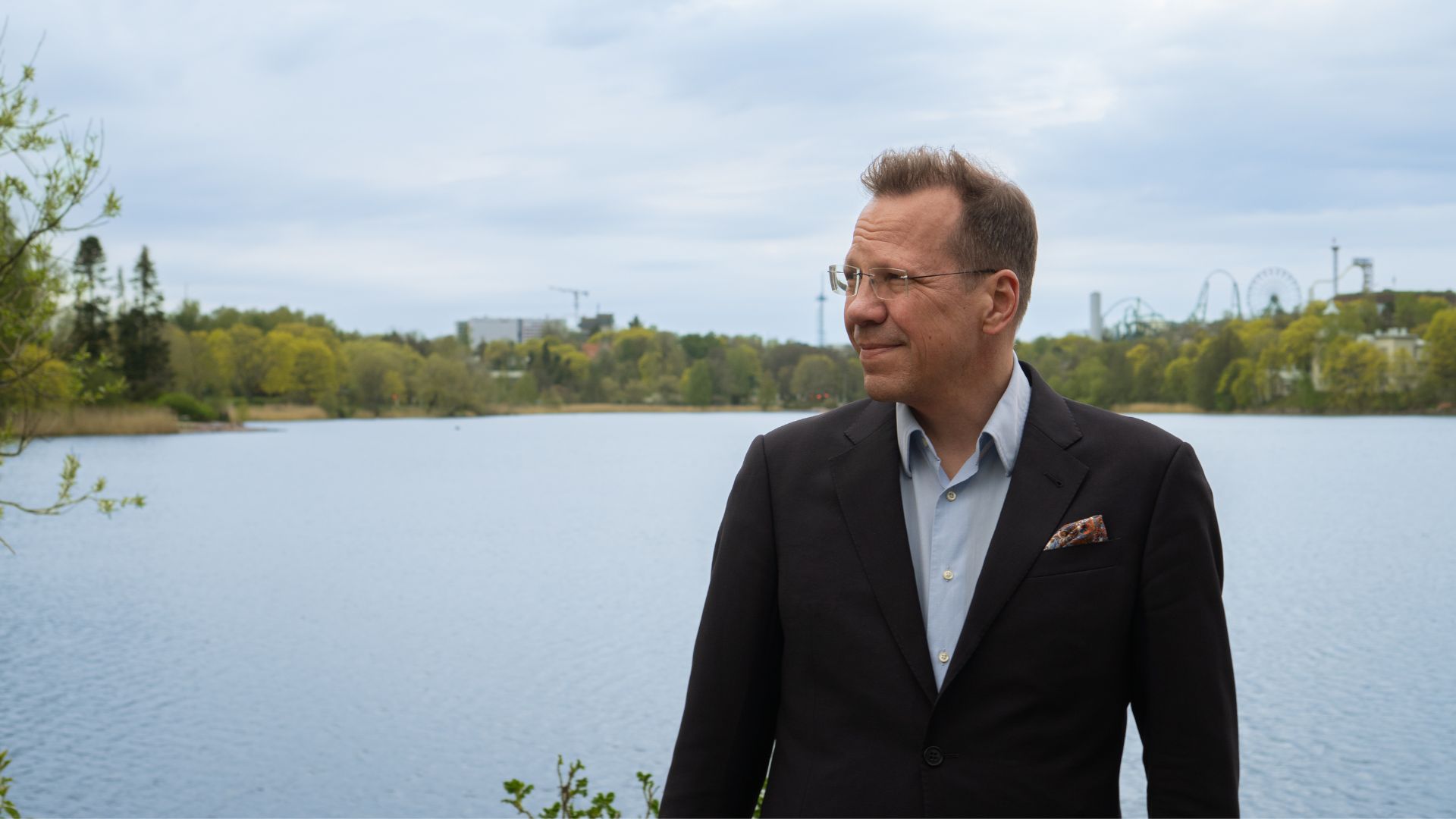
Jonas Kronlund, Elisa: Where climate goals meet the real economy
At the UN Global Compact’s Climate Action Platform meeting on 14–15 April, the focus was on the value chain, where climate ambition is hardest to deliver in practice and where outcomes are ultimately decided.
The UN Global Compact Climate Action Platform brings together companies from different sectors and regions to accelerate credible, science-based climate action. For direct and energy-related emissions, meaning Scopes 1 and 2, there are by now proven solutions available, from renewable electricity and district heating procurement through energy efficiency and electrification, and companies are broadly addressing them. The bigger challenge, and the one that determines whether 1.5°C-aligned pathways remain credible, is in Scope 3, where emissions sit in the value chain and are outside any single company’s direct control.
For an ICT company like Elisa, this is far from a marginal topic. Elisa has set a 2030 climate target of a 42% reduction in Scope 1, 2 and 3 greenhouse gas emissions, and a net‑zero target for 2040, validated by the Science Based Targets initiative (SBTi). The vast majority of Elisa’s emissions arise from network equipment and infrastructure, the energy required to operate services, and the products customers use to access those services.
The Copenhagen meeting placed this challenge squarely at the centre, and what came out of the two days was not only an account of progress, but also a clearer view of the journey still ahead of us.
From measurement to momentum – Day 1
Day 1 set the tone for the meeting. From the opening remarks of UN Global Compact leadership through science-based keynotes and practitioner panels, the message was consistent. Most emissions are outside companies’ direct control, yet real progress depends on embedding carbon considerations into procurement, supplier engagement and everyday business decisions. Speakers emphasised that the question is no longer whether to act, but how fast we can move from measurement to real impact in the value chain – avoiding the trap of analysis paralysis.
"Most emissions are outside companies’ direct control, yet real progress depends on embedding carbon considerations into procurement, supplier engagement and everyday business decisions."
One theme that ran through the day deserves particular attention. Many suppliers across value chains have already been investing in decarbonisation for years, switching to renewable electricity, improving energy efficiency, redesigning products and processes, and setting science-based targets. The harder question is why so little of this work has so far been clearly visible in buyer-reported emissions figures. Methodology, rather than ambition, appears to have been the binding constraint in many cases.
This matters because that constraint has only over the last couple of years started to diminish. As supplier-level data improves, buyers can begin to distinguish between physically identical products with very different embedded emissions. Two components meeting the same technical specification, but produced under different electricity systems or process technologies, can carry materially different footprints. Capturing that difference is important, both for reporting credibility and for steering procurement decisions toward real-world emission reductions.
For the ICT sector specifically, the structural picture is partly favourable and partly challenging. Sectors like construction or business services often work with tens of thousands of suppliers, and these suppliers change from project to project. ICT companies, on the other hand, tend to have relatively stable relationships with a smaller set of emissions-critical partners, perhaps a hundred core suppliers out of several thousand in total. The difficulty is that transparency often diminishes beyond the first one or two tiers, and some of the most carbon-intensive activities sit deeper than that.
From momentum to market impact – Day 2
While Day 1 established the direction, Day 2 focused on execution. Keynotes and workshops focused on how companies can use procurement, incentives and collaboration to drive decarbonisation beyond their own operations. Speakers argued that meaningful Scope 3 reductions depend on clear expectations, aligned incentives and long-term partnerships, supported by data of sufficient quality to inform decisions.
The methodological transition discussed on Day 1 became more concrete here. As soon as supplier action begins to show up in buyer inventories, an older requirement of emissions accounting comes back into view, namely continuity over time. Standards are also evolving. The GHG Protocol issued its first major Scope 3 revision since 2011 earlier this year, and the Science Based Targets initiative’s version 2 standard update is tightening expectations for coverage and data quality. These developments are necessary, but they also make a practical question more pressing. When methodology changes during a reporting cycle, how can reported trends remain interpretable for external stakeholders?
A workable answer, consistent with how many practitioners are already operating, is a deliberate hybrid approach implemented transparently. In practice this approach rests on three principles.
Stabilising the historical baseline to preserve time-series comparability, rather than retroactively “upgrading” past years with data that did not exist at the time.
Introducing improved activity-based or product-level data prospectively, allowing supplier action to shape future inventories where the evidence base allows.
Retaining weight-based or spend-based estimates as a coverage backstop, so that data-quality improvements in some categories do not come at the cost of blind spots elsewhere in the inventory.
Methodology changes should be disclosed explicitly as bridge items, allowing stakeholders to distinguish between impacts from improved measurement and genuine emission reductions. Improved methodologies may also enhance the identification and attribution of supply-chain climate actions implemented over previous years but not fully reflected under earlier approaches. Base-year recalculation is applied where required by standards (e.g. where changes exceed 5%) and technically feasible. Where historical data limitations prevent recalculation (particularly in parts of the value chain) the change is disclosed as a break in the time series, with assumptions, limitations, and impacts on comparability explained.
In practice, credibility in real-world transition reporting depends as much on consistency and interpretability as on technical precision at any single point in time.
For European companies, this evolution is not happening in a voluntary vacuum, and compliance has clearly been driving things forward. Under the CSRD and ESRS E1, and despite some steps back through the Omnibus, many companies are still required to disclose Scope 3 emissions by category, explain the methodologies used, and describe significant changes over time, with explicit links to transition planning and value-chain due diligence. A clearly described hybrid model should fit well within this disclosure logic. It allows companies to demonstrate progress in supplier engagement and procurement while maintaining a consistent and comparable emissions reporting pathway over time.
At the same time, greater visibility of supplier emissions raises a question that should not be skipped. Improved supplier data does not automatically equate to decision-grade data, and not every reported reduction carries the same climate value. Buyer companies remain responsible for assessing materiality, relevance and credibility, rather than simply aggregating supplier-reported numbers.
Picture from the UN Global Compact's EU Climate Action Platform.

Cost incidence and the new normal
The Copenhagen discussions also highlighted that decarbonisation has real costs, and that these are not always easy to pass forward in markets or value chains. Improved data and better methodologies do not remove this constraint, but they do make it visible. As supplier action begins to show up in buyer inventories, attention will probably turn for a while to questions of cost and cost-sharing. Over time, however, this should lead to a new normal, with a raised bar and a new baseline for all stakeholders involved, where the business choices behind decarbonisation (procurement, pricing, long-term contracts, shared investment) will become part of how the company operates, rather than side effects of reporting.
"Decarbonisation has real costs, and these are not always easy to pass forward in markets or value chains."
For Elisa, this aligns with how our climate transition is already unfolding. We do not decarbonise in isolation, and we recognise that the transition can have real costs, especially in the early stages. Progress toward our net-zero ambition depends on bringing the value chain along with us, through clear expectations, shared data, collaboration, and increasingly climate-aware procurement decisions. Recent steps include a more focused supplier engagement programme designed to align supplier data, climate actions and expectations with our climate transition strategy and reporting needs.
The UN Global Compact Climate Action Platform provides a valuable forum for working through one of the hardest questions of the transition, which is how to reach a low-carbon “new normal” even where decarbonisation costs can be difficult to transfer forward. The discussions in Copenhagen reinforced that there are no simple answers. But they also showed that companies which embed climate considerations into purchasing decisions, supplier governance and long-term investment choices, and which acknowledge the trade-offs between accuracy, continuity and cost, are best positioned to turn value-chain complexity into resilience, innovation and lasting impact. It is a forum that deserves continued engagement in the coming years.