
SDG Benchmarks for Business Transformation
Tapahtumapäivä
01.03.2022
Tapahtumapaikka
Online
Join the introductory session of UN Global Compact Network UK's webinar series on SDG Benchmarks.
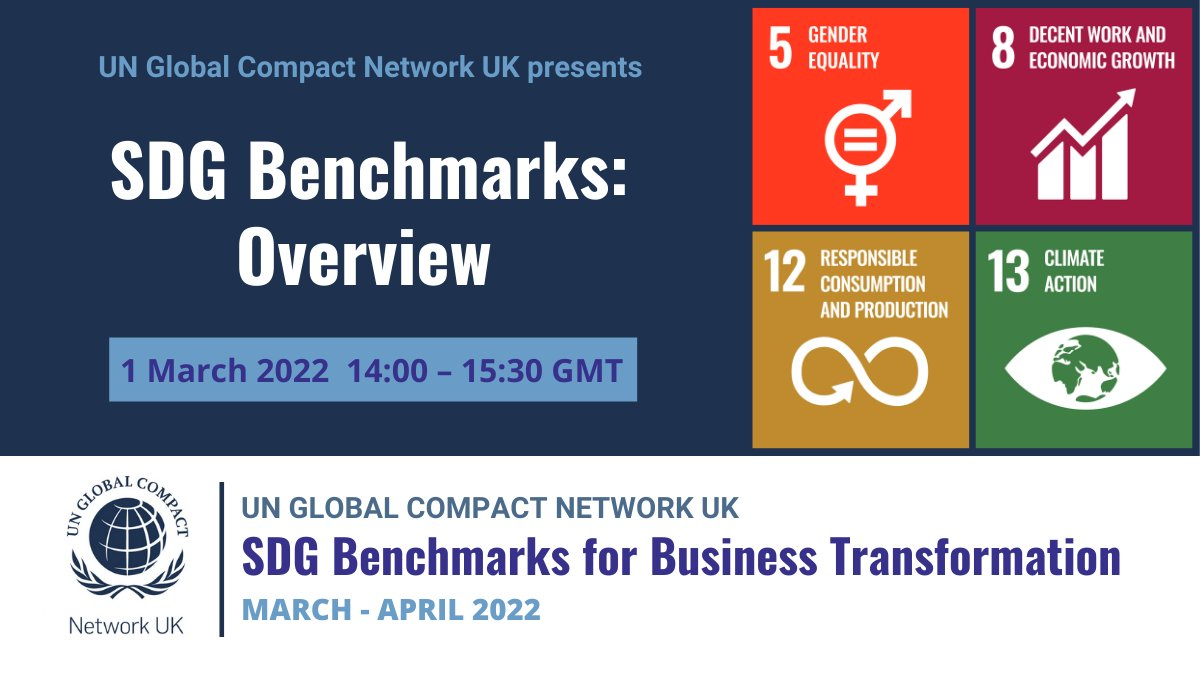
The UN Global Compact's SDG Business Benchmarks are the perfect gateway for companies seeking to integrate the Sustainable Development Goals (SDGs) into their core strategies. The Benchmarks translate the ambition level of the SDGs into concrete, achievable aspirations for business in the areas that are most relevant to business.
This session will give an overview of the UN Global Compact's SDG Benchmarks and the role they can play in helping business set and achieve their sustainability objectives. We will explore the business case for business engagement with the SDGs and hear from leading companies that have overcome the challenges and are now realising the opportunities of SDG alignment.
This event is held in English on 1 March 2022 at 16–17:30 EET. Participation is open and free to all.
Registration
This webinar is part one of the 5-part SDG Benchmarks for Business Transformation webinar series by UN Global Compact Network UK. Register for the other four sessions focusing on specific SDGs here.
Seuraavat tapahtumat
05.10.2026
Online
Kick-off webinar: SDG Implementation Beyond 2030
Discussions on the future of the SDGs beyond 2030 will begin in September 2027. While the format and process of the expected negotiations remains to be decided upon, and the main focus of UN Member States, international organisations as well as other actors and stakeholders is on implementing the SDGs, particularly the science community and civil society have started mapping possible scenarios and narratives around the post-2030 agenda process.
07.10.2026
Online
Communication on Progress (CoP): Office Hours
Join the CoP team for a live Q&A office hours session, where they will walk through key requirements and share important updates for the 2026 Communication on Progress (CoP) reporting cycle.
07.10.2026
Helsinki
VTT & UN Global Compact Network Finland seminar: “Green, prosperous and responsible: How to lead the way in green business and investments”
In this seminar, we will explore sustainable business and green investments from multiple perspectives: where the greatest opportunities lie, what risks need to be managed, how regulation and financing instruments can be turned into strategic advantages, and how timing influences competitiveness.