
Understanding water resilience to safeguard and accelerate business
Tapahtumapäivä
13.06.2024
Tapahtumapaikka
Online
Learn what your risks are, how to assess them, and where to apply this new knowledge to build long-term water resilience for your business.
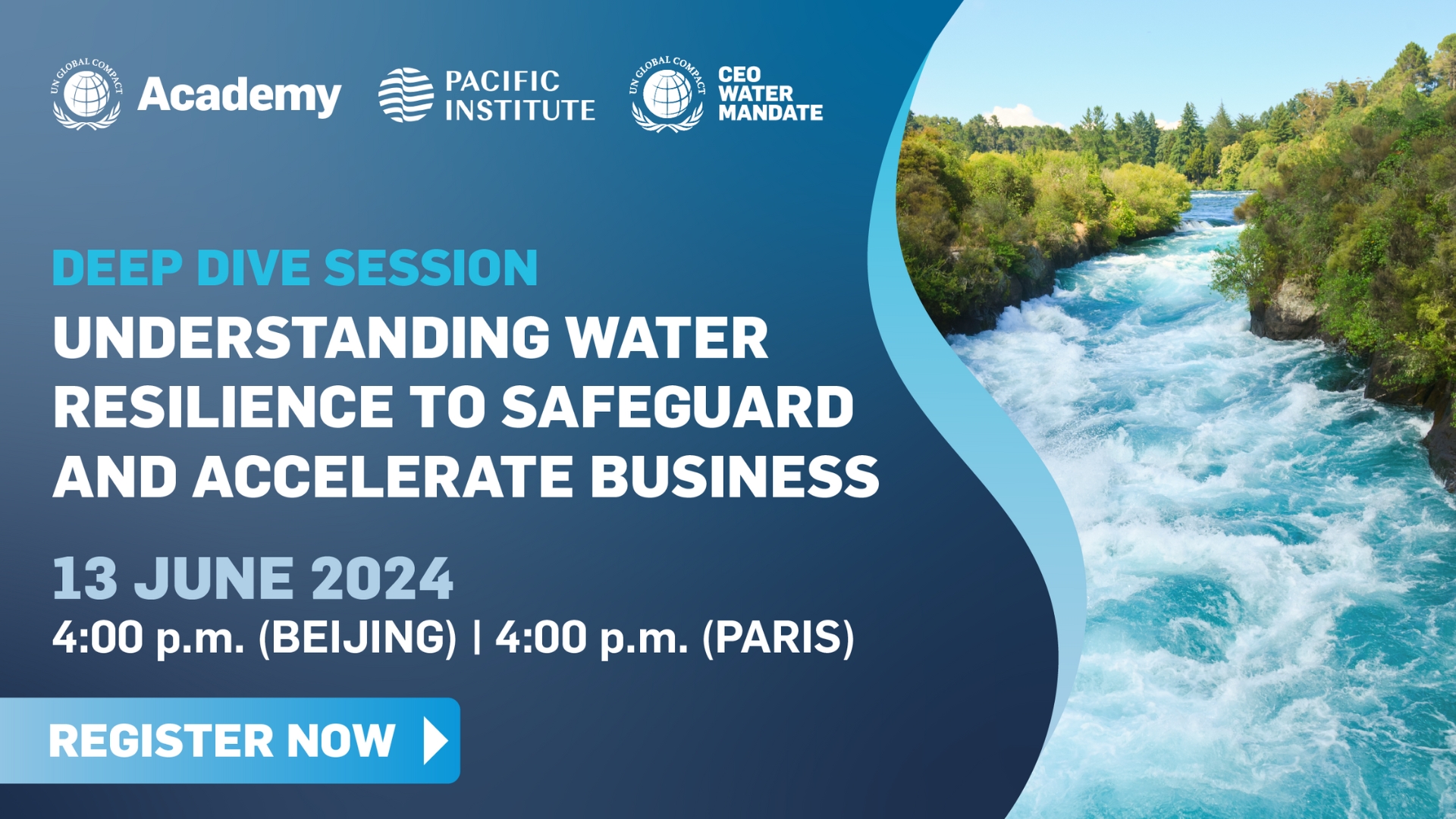
It is projected that there will be a 50% shortfall in water supply by 2030 – severely impacting the direct operations and value chains of businesses everywhere. According to water data disclosed by companies, over $390 billion USD is already at risk. Businesses must be dynamic and identify appropriate approaches to address water-related shocks and stresses.
This session will help you understand the concept of water resilience and equip you with practical guidance to understand your company’s water risk, as well as how to develop resilience actions and strategies. Learn what your risks are, how to assess them, and where to apply this new knowledge to build long-term water resilience for your business.
Sign up for the webinar that best fits your schedule:
13 June, 4:00 p.m Beijing (11 AM in Helsinki)
Simultaneous translation available in Chinese, Japanese and Korean
13 June, 4:00 p.m. Paris (5 PM in Helsinki)
Simultaneous translation available in French, Spanish and Portuguese
Seuraavat tapahtumat
18.09.2026 - 27.09.2026
New York
YK:n yleiskokousviikko (UNGA)
Syksyn huippuviikko tulee taas. UN Global Compact Suomi vastaa jälleen Suomen virallisesta yritysdelegaatiosta.
20.09.2026 - 27.09.2026
New York
Climate Week NYC
Maailman suurin ilmastotapahtuma Climate Week NYC kokoaa vuosittain yhteen yli 100 000 osallistujaa ympäri maailman taklaamaan maailman suurimpia ilmastohaasteita.
25.09.2026
Online / In-Person
SDG Flag Day
Kestävän kehityksen liputuspäivä tulee taas! Liitytkö satojen organisaatioiden mukaan ympäri maailman?